A GenAI Project That Delivered Measurable Business Impact
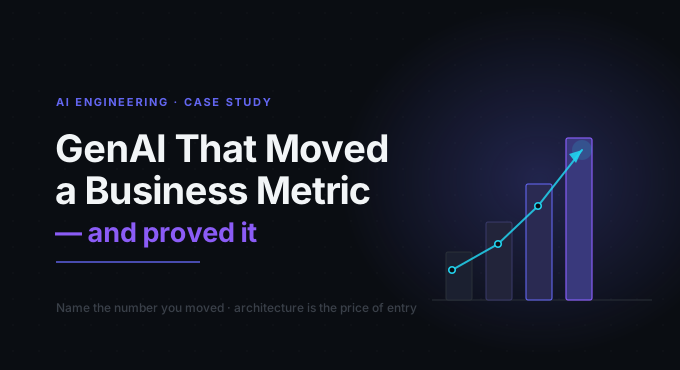
A GenAI project succeeds or fails on whether you can name the business metric it moved — and prove it. The architecture is the price of entry, not the win.
· 7 min read
Notes on building practical AI systems — plus tech opinions and a clearly separated personal stream.
A GenAI project succeeds or fails on whether you can name the business metric it moved — and prove it. The architecture is the price of entry, not the win.
· 7 min read
In regulated, multi-tenant GenAI, governance isn't a constraint on the build — it's what decides whether you can ship. Design it into the first diagram.
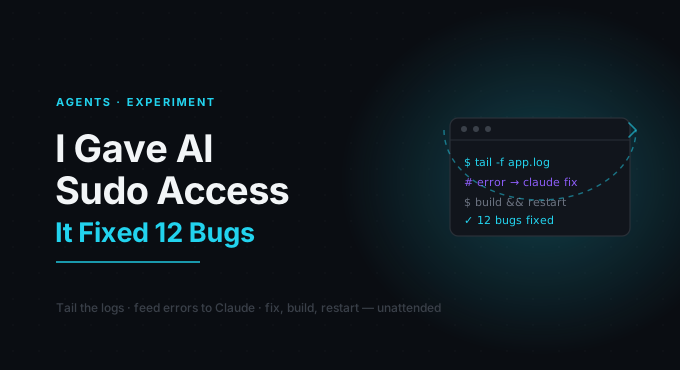
A self-healing feedback loop: tail the logs, feed errors to Claude Code, let it fix, build, and restart — unattended. Here's what it actually fixed.
Ground the model in retrieved evidence, constrain its output, verify its claims, and measure everything. A layered defense against LLM hallucination.
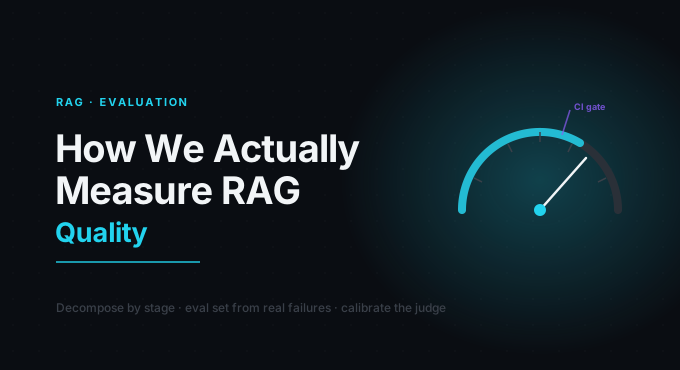
RAG quality by vibes doesn't survive a second engineer. Decompose by stage, build the eval set from real failures, calibrate the LLM judge, and gate CI.
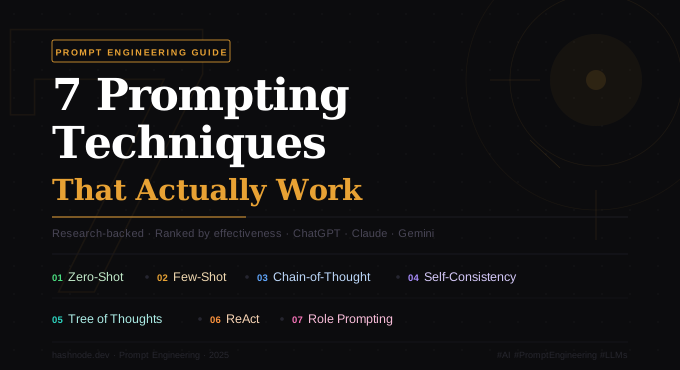
A research-backed breakdown of the prompting methods — from zero-shot to ReAct — that reliably produce better, smarter, more useful AI output.
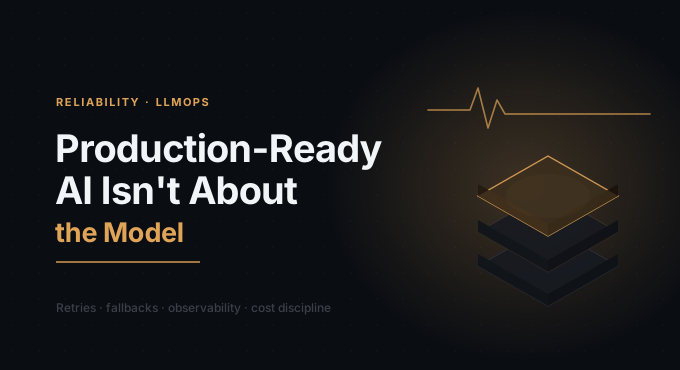
Shipping production AI isn't about model benchmarks — it's the reliability, retries, fallbacks, observability, and cost discipline that keep LLM systems alive.
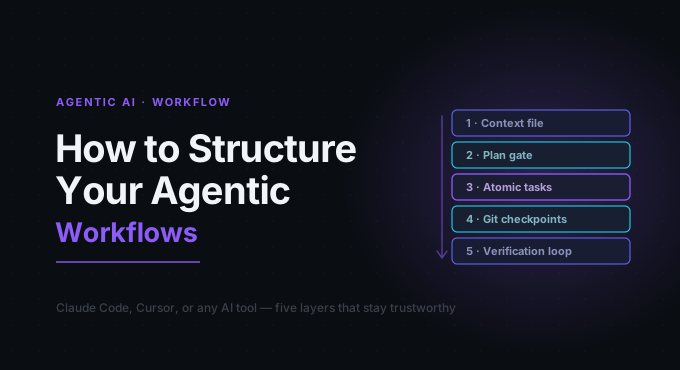
Five layers — context file, plan gate, atomic tasks, git checkpoints, verification loop — that make AI agents fast and trustworthy instead of chaotic.
What distance running taught me about debugging: both reward patience, a steady pace, and trusting the process long before you can see the finish line.
Episodic, bi-temporal memory with Graphiti lets an AI agent answer not just what's true now, but what was true when — without re-indexing the whole world.
Code is many languages plus an identifier dialect tokenizers shred. Use code-specialized embeddings, identifier-aware retrieval, and structure-aware chunking.
Reliable agents come from control, not capability. Cap turns and time, push predictable steps into a state machine, and keep a human on the irreversible ones.
Every vector DB benchmark was run on someone else's data. Benchmark your own vector count, dimensions, and — above all — your real filtering pattern.