AI & Engineering · 16 min
The Renderer Nobody Has Used Since 2023
A hands-on guide to Google's Open Knowledge Format on a JS/TS monorepo: bundle layout, a scaffold script, CI wiring, and outcomes after three months.
19 posts
A hands-on guide to Google's Open Knowledge Format on a JS/TS monorepo: bundle layout, a scaffold script, CI wiring, and outcomes after three months.
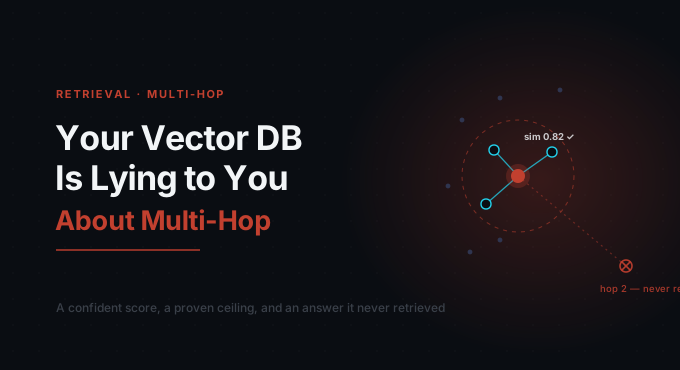
Dense retrieval hits a proven geometric ceiling on multi-hop questions and fails silently — similarity scores stay confident even when the evidence is missing.
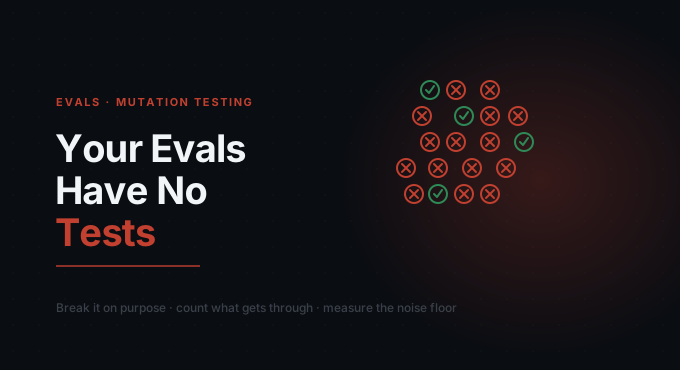
A green eval suite isn't evidence your agent works — it's the absence of evidence. Mutation testing shows you exactly how blind your evals really are.
A GenAI project succeeds or fails on whether you can name the business metric it moved — and prove it. The architecture is the price of entry, not the win.
In regulated, multi-tenant GenAI, governance isn't a constraint on the build — it's what decides whether you can ship. Design it into the first diagram.
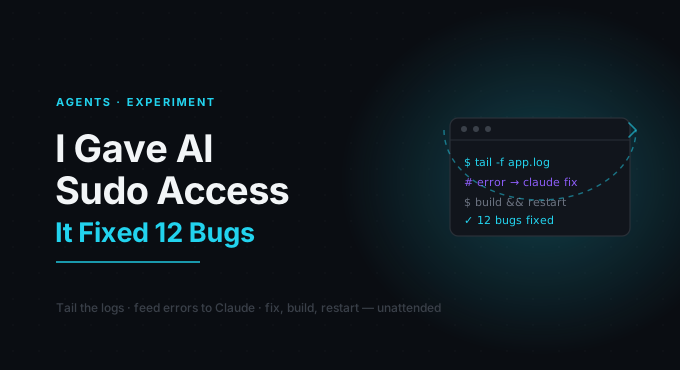
A self-healing feedback loop: tail the logs, feed errors to Claude Code, let it fix, build, and restart — unattended. Here's what it actually fixed.
Ground the model in retrieved evidence, constrain its output, verify its claims, and measure everything. A layered defense against LLM hallucination.
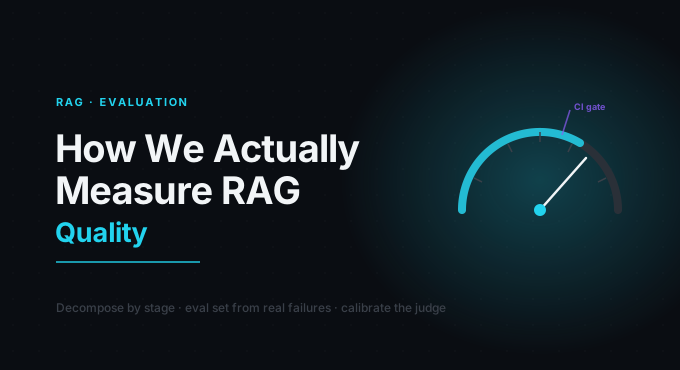
RAG quality by vibes doesn't survive a second engineer. Decompose by stage, build the eval set from real failures, calibrate the LLM judge, and gate CI.
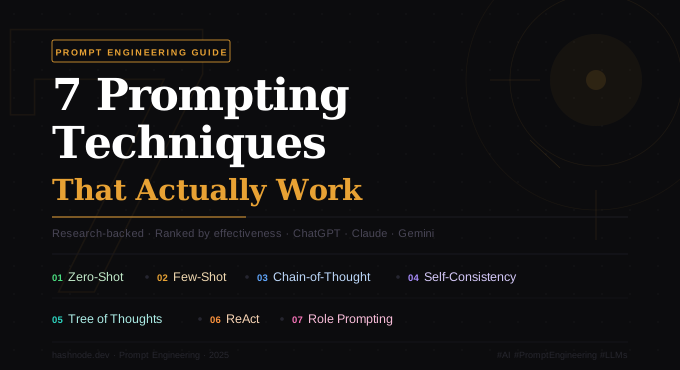
A research-backed breakdown of the prompting methods — from zero-shot to ReAct — that reliably produce better, smarter, more useful AI output.
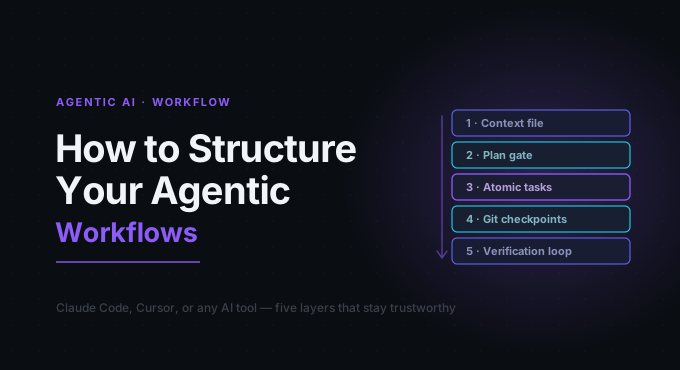
Five layers — context file, plan gate, atomic tasks, git checkpoints, verification loop — that make AI agents fast and trustworthy instead of chaotic.
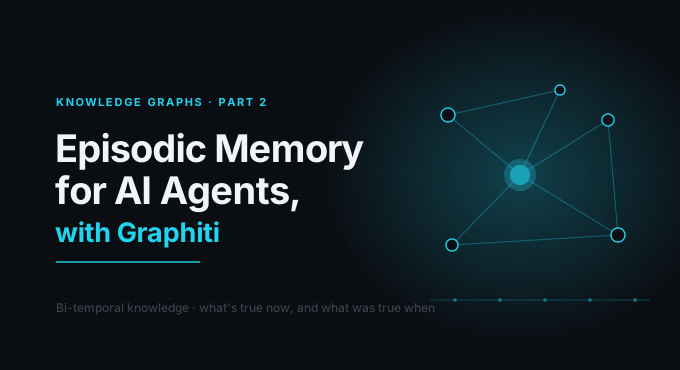
Episodic, bi-temporal memory with Graphiti lets an AI agent answer not just what's true now, but what was true when, without re-indexing the whole world.
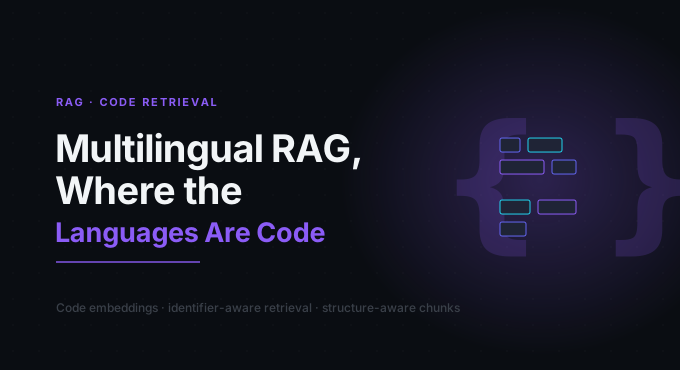
Code is many languages plus an identifier dialect tokenizers shred. Use code-specialized embeddings, identifier-aware retrieval, and structure-aware chunking.
Reliable agents come from control, not capability. Cap turns and time, push predictable steps into a state machine, and keep a human on the irreversible ones.
Vector-only RAG returns flat, context-poor chunks ranked by similarity. Knowledge graphs model entities and relationships to traverse why things connect.
Every vector DB benchmark was run on someone else's data. Benchmark your own vector count, dimensions, and — above all — your real filtering pattern.
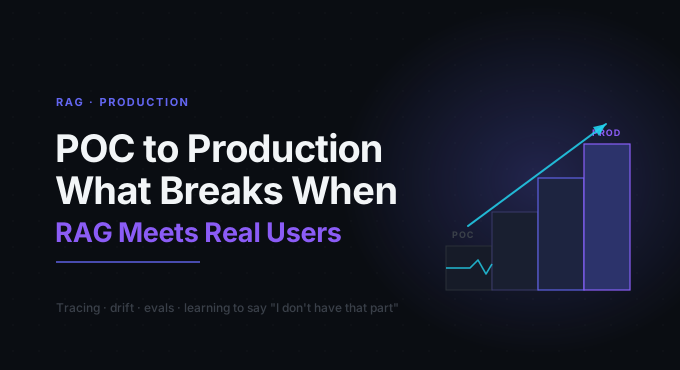
A RAG demo proves the happy path exists. Production is everything else — tracing, drift, evals, and learning to say 'I don't have that part.'
Most LLM hallucination is a retrieval failure in disguise. Fix the context first, force citations, and give the model a sanctioned way to say 'I don't know.'
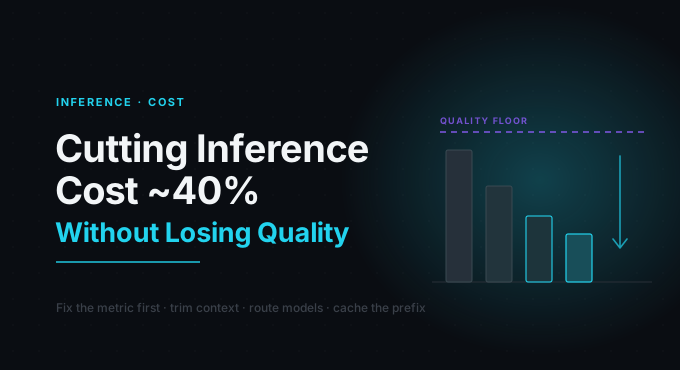
Inference cost optimization is a measurement problem in disguise. Fix the quality metric first, then trim context, route models, and cache the stable prefix.
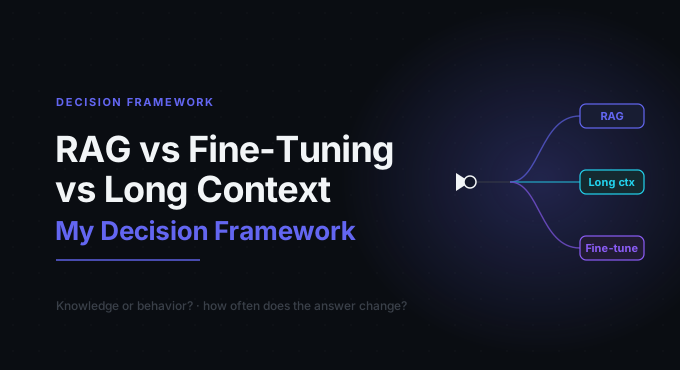
'Should we fine-tune?' is usually the wrong first question. Ask instead: is the gap knowledge or behavior, and how often does the answer change?